
Floating Power: Energy, Infrastructure and South-South Relations
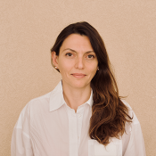
Visiting Researcher, Gökçe Güne is Associate Professor in Anthropology at Rice University. Her research investigates how infrastructure transforms amid energy and climate change-related challenges. Her first book, Spaceship in the Desert: Energy, Climate Change and Urban Design in Abu Dhabi (Duke University Press, 2019), focuses on the construction of renewable energy and clean technology infrastructures in the United Arab Emirates, with a specific emphasis on the Masdar City project. Her second book, Floating Power: Energy, Infrastructure, and South-South Relations (Duke University Press, 2026), examines the emergence of a Turkish-built floating power plant in Ghana, analyzing how such inventive infrastructure shapes South‑South relations and embodies broader imaginations of energy futures.
Dr Günel is one of the editors of Limn and has most recently co-edited Limn 11—The Obsolescence Issue. Dr Günel co-authored "A Manifesto for Patchwork Ethnography" (2020) and co-leads Patchwork Ethnography. The book Patchwork Ethnography is forthcoming with the University of Chicago Press in 2027.
The University of Queensland collects information to facilitate your registration for the nominated event and for the purpose of maintaining contact with you, including future events and other engagement opportunities. The University will not disclose the information to a third party without your consent, unless such disclosure is authorised or required by law. For further information, please refer to the University’s Privacy Policy.
About Floating Power: Energy, Infrastructure and South-South Relations
Presented by Guest Researcher, Gökçe Güne, Floating Power considers the role of energy production on an international scale, challenging the idea that new infrastructures wholly replace older sources of energy. Shifting the discussion from energy transition to energy accumulation, the talk will engage with a range of electricity producers, including hydroelectric, heavy fuel oil, natural gas, and solar power plants, noting their intersections as societies work to expand their supply. Floating Power uses the Ayşegül Sultan, a Turkish-built floating power plant in Ghana, as a prime example and vehicle for exploring how state and corporate intervention shape energy technologies. The talk will challenge the linear thinking and substitutive logic of mainstream energy discourse, instead showing how various power sources often grow symbiotically.
Venue
St Lucia Campus